Digital Art Has a History: “Open to the Public” Lecture with Mary McCawley
As the ways artists make and share work continue to expand, so then can the conversations we create around them.
That is part of the thinking behind the Kansas City Artists Coalition’s “Open to the Public” Lecture Series. The program gives us an opportunity to spend more time with the ideas surrounding contemporary creative practice—not only what artists are making, but the histories, questions, research, and experiences that help us understand that work in a larger context.
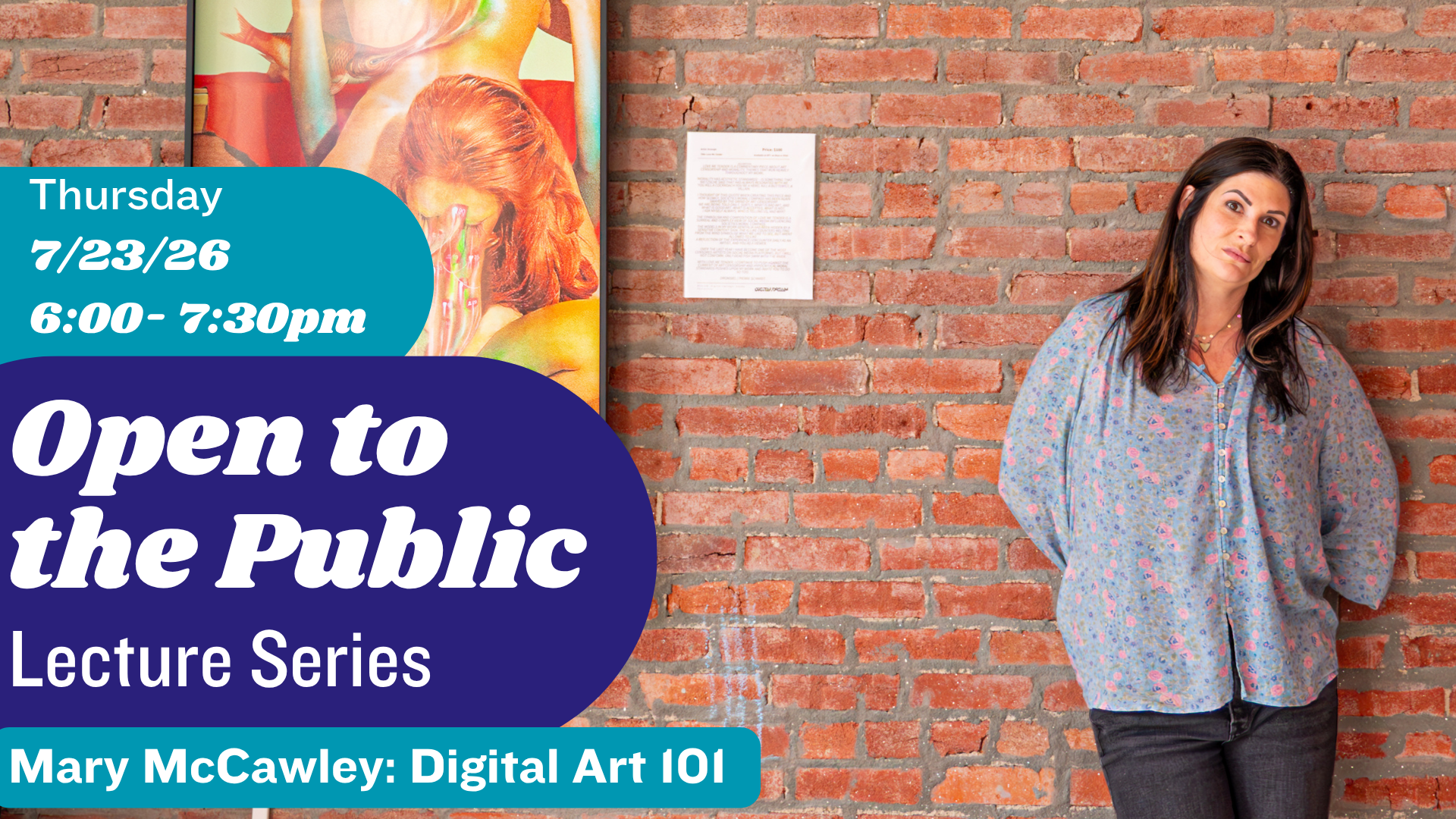
For Digital Art 101, KCAC welcomed digital art curator Mary McCawley for a look at the history of digital art and the artists who have been experimenting with technology for generations. The lecture was an especially important addition to our programming alongside KCAC’s Screen // Seen exhibition series, which creates a dedicated space for presenting digital and screen-based artwork.
While digital work can sometimes be discussed as though it is an entirely new development in contemporary art, its history stretches back decades. Mary begins in the 1950s, when artists were creating work with electricity and experimenting with technologies such as oscilloscopes before computers were being widely used to make images.
From there, Digital Art 101 follows the development of the field across more than 60 years. The lecture looks at early computer-generated artwork of the 1960s; Harold Cohen’s AARON, which began in 1972; the introduction of digital painting systems in the 1980s; the emergence of net.art in the 1990s; and artists using software, video games, blockchain, and other technologies as both tools and artistic material.
That history provides useful context for the work being made and exhibited today. It also complements what Screen // Seen allows us to do within the gallery: make room for practices that don't necessarily begin or end with a physical object and continue expanding what audiences can encounter through KCAC exhibitions.
The “Open to the Public” Lecture Series gives us another way to build upon those exhibitions. Sometimes that means hearing directly from an artist about their practice. Other times it means looking at history, research, education, or another field entirely. The goal is to make space for continued learning that is free, accessible, and connected to the creative work happening around us.
Watch the recording, learn a little more about where digital art has been, and then come see where artists are taking it next.