A Collection Built with Intention: KCAC and MOCSA
A new permanent collection, and a collaboration rooted in community.
By Babs O’Halloran KCAC Director of Operations
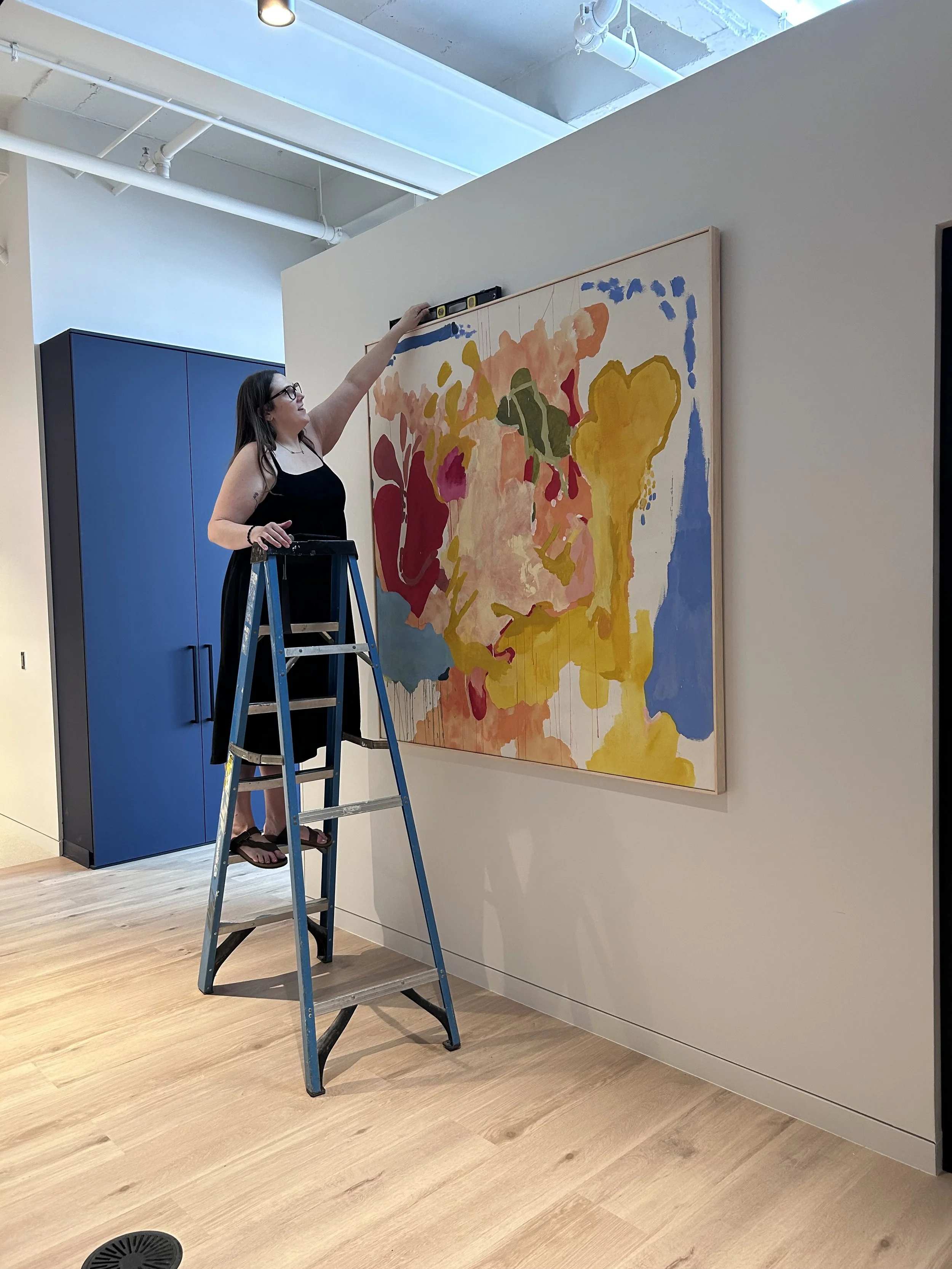
Director of Operations Babs O’Halloran installing a painting by Chelsea Bihlmeyer.
There's something incredibly satisfying about seeing months of planning, conversations, and decision-making finally come together. That was certainly the feeling when I walked through the Metropolitan Organization Countering Sexual Assault's (MOCSA) new building and saw the artwork installed throughout the space.
Through Kansas City Artists Coalition's (KCAC) Curation Services Program, I had the opportunity to work with MOCSA's leadership and art selection committee to develop a permanent collection for its new facility. What started as an invitation from Board Chair Zach Bickel grew into months of thoughtful collaboration, resulting in the acquisition of artwork by ten Kansas City artists.
MOCSA's new $21.3 million facility doubles its capacity to provide specialized services and support for survivors of sexual violence. With such an important purpose guiding the building's design, it was essential that the artwork receive the same level of consideration as the spaces it would inhabit.
Finding the Right Balance
One of the things I appreciated most about this project was how seriously the selection committee approached the artwork. We weren't simply choosing pieces that looked nice together. There were meaningful conversations about color, subject matter, materials, emotional responses, and even the subtle undertones a work might carry.
We also had to consider the different ways people would experience the building. Artwork in client-facing areas called for different considerations than pieces in administrative spaces or rooms used for meetings with donors and board members. What resonated with one committee member didn't always resonate with another, and those differences often led to the most productive conversations.
I particularly valued the perspectives of MOCSA's therapists, whose responses sometimes brought considerations to the table that the rest of us hadn't immediately recognized. My role was to help the group work through those reactions, introduce artists they might not otherwise have encountered, and find the balance between their preferences, the needs of the space, and the artwork itself.
Over at least five rounds of artist presentations, we narrowed selections, revisited favorites, and discussed how to make the most of the acquisition budget. We also spent time considering placement, making sure the works that resonated most strongly with the group would have opportunities to be encountered and enjoyed by as many people as possible.
Throughout the process, I kept returning to the idea that the collection needed to feel gentle without being boring or one note. Strong without being intimidating. Sophisticated without feeling inaccessible. We wanted the work to have a presence of its own while still feeling natural within a space dedicated to supporting survivors with dignity and care.
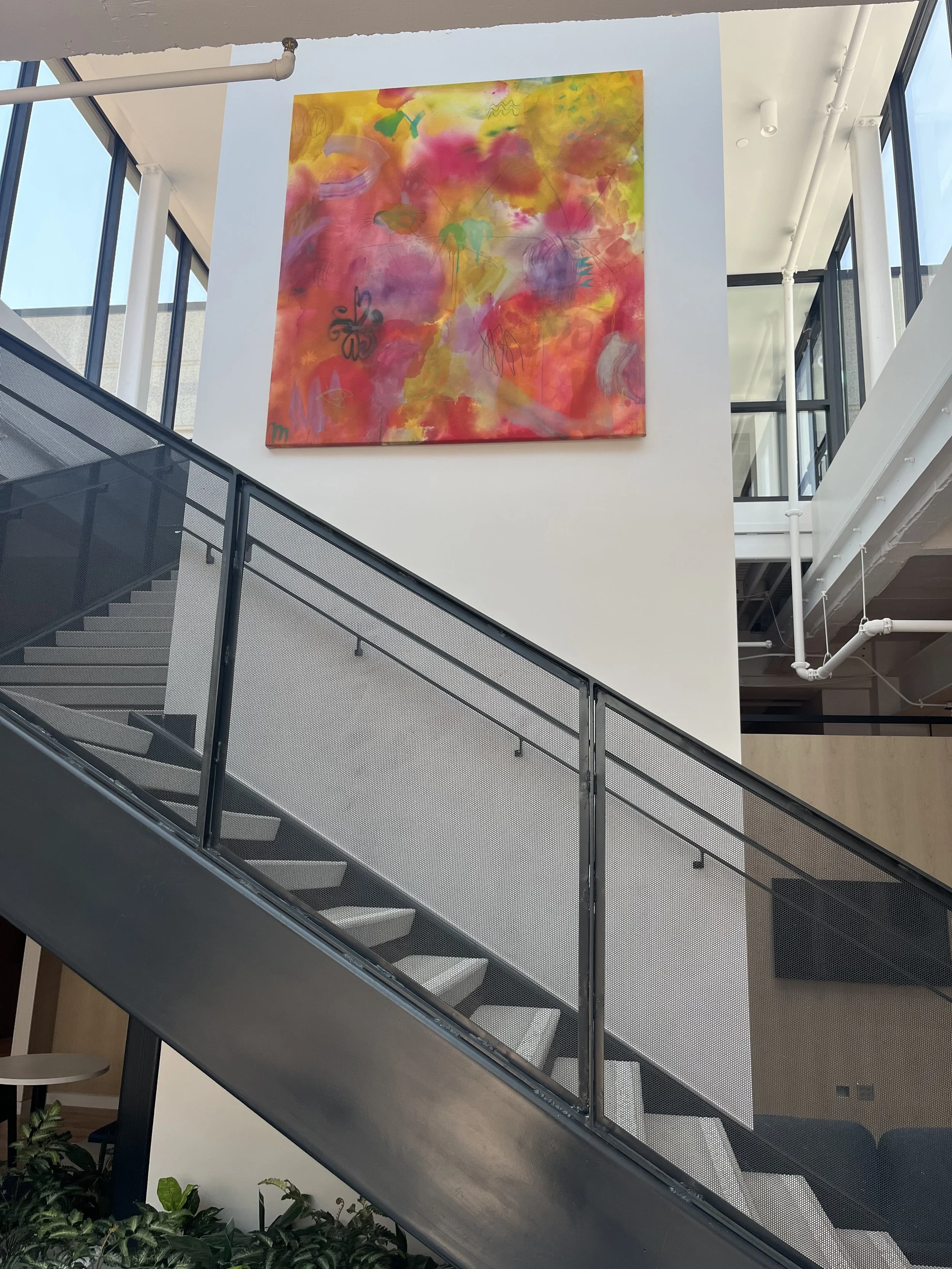
Painting by Jane Booth installed at MOCSA.
Ten Artists, Many Perspectives
The final collection includes artwork by K.E. Griffin, Kate Clements, M. Willie Garcia, Kim Eichler-Messmer, Chelsea Bihlmeyer, Wolfe Brack, Heinrich Toh, Susan White, Jane Booth, and Gentry Mullen.
I'm especially pleased with the variety of artistic practices represented. While much of the collection leans toward abstraction, the artists work across a wide range of materials, techniques, and visual approaches. Each brings something distinct to the building, and together their work feels connected without becoming repetitive.
The project also created an opportunity for a new commissioned work by Susan White, whose honey locust thorn forms will occupy a ceiling window well near the boardroom and advocacy department. It was exciting to see the committee respond so strongly to an artist's practice that they wanted to support the creation of something specifically for the space.
Ultimately, what brings the collection together isn't one particular style or medium. It's the care taken in considering each piece and how it contributes to the larger environment.
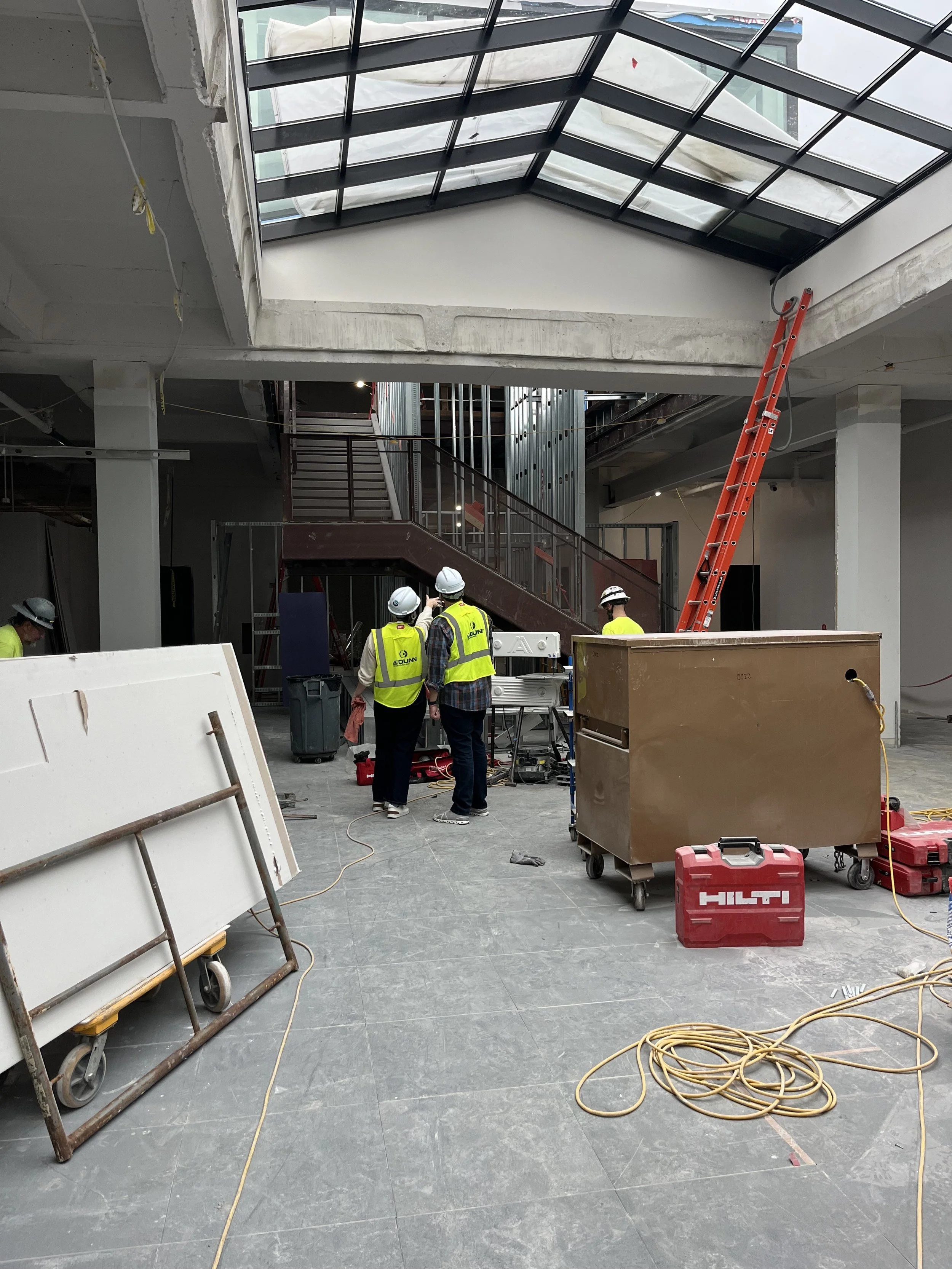
Planning stage at MOCSA while under construction. Executive Director Courtney Wasson seen here with MOCSA Board President Zach Bickle.
Seeing It All Come Together
After months of planning and coordination, KCAC Exhibitions Director Thayer Bray and I installed the collection, with several artists completing the final details of their more complex installations themselves.
Seeing the finished result brought a wonderful combination of relief and satisfaction. So much work had gone into making all these pieces fit together, and in the end, the artwork felt like it had always belonged there. That's one of my favorite parts of curating: when all the complicated decisions behind the scenes come together so naturally that the effort becomes almost invisible.
It was also personally rewarding to work with a group that welcomed my expertise and trusted the guidance I could offer. MOCSA's committee was engaged, curious, and willing to have honest conversations throughout the process. That kind of collaboration makes the work better, and it made this project a genuine pleasure to be part of.
The opening celebration was a wonderful way to see everything come full circle. The artwork was enthusiastically received, and I was surprised and honored to be invited to join the community partners for the ribbon cutting. It was a lovely moment of recognition for KCAC's involvement and for the many people who contributed to bringing MOCSA's new home to life.
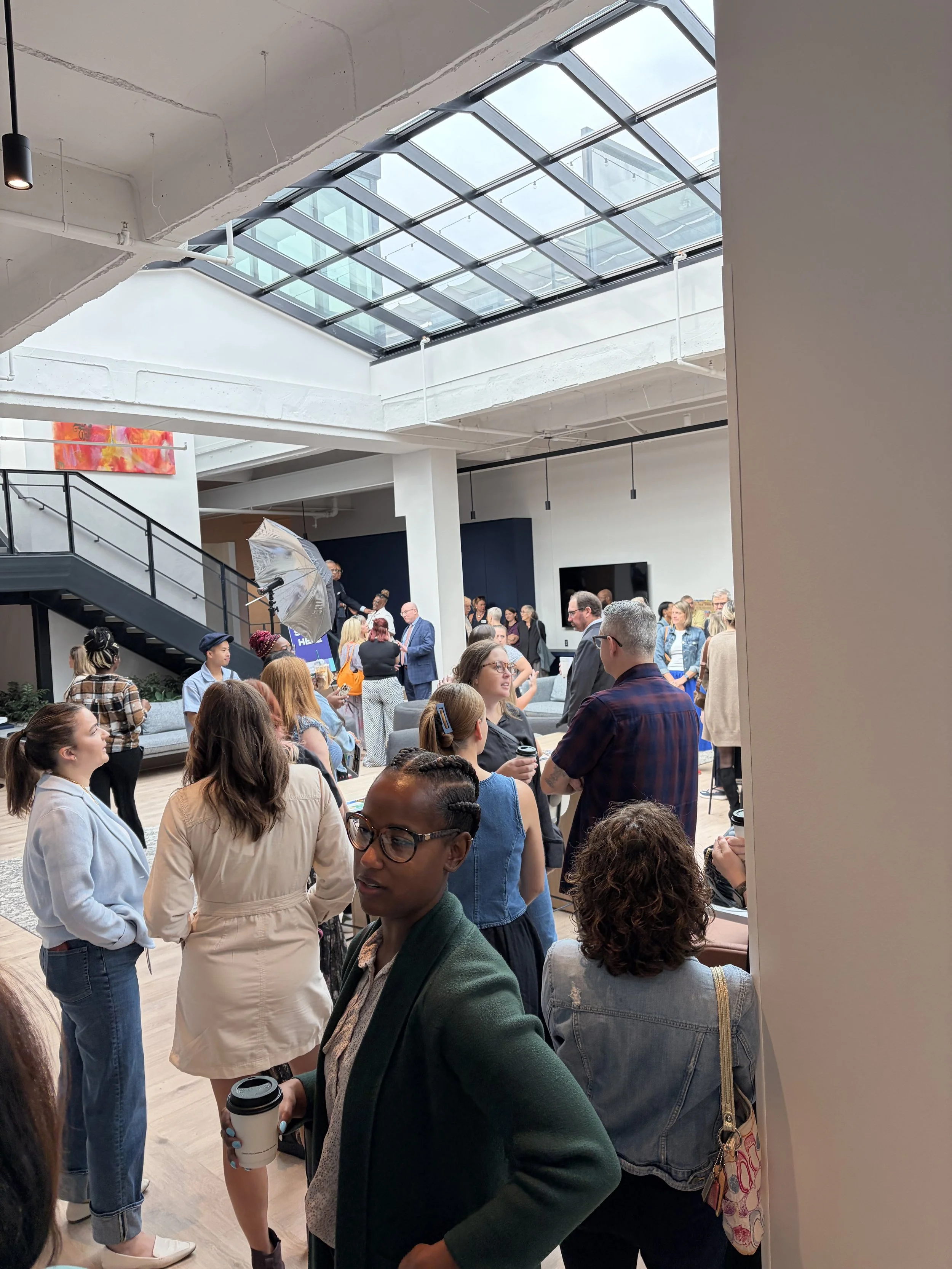
Reception for the ribbon cutting ceremony at MOCSA on 9/29/26
An Investment in Our Community
Something especially important about this collaboration is that KCAC provided its curatorial services without a consulting fee or commission on artwork sales. All acquisitions were made directly from the artists, ensuring that MOCSA's investment in the collection also directly supported our local creative community.
Both MOCSA and KCAC were founded in 1975, and I love that two organizations with more than fifty years of history in Kansas City found this opportunity to work together.
For KCAC, connecting artists with opportunities to share and sell their work is at the heart of what we do. Knowing that these ten artists will have a permanent presence in a building serving such an important purpose makes this collaboration especially meaningful.
I'm grateful to Zach, the entire MOCSA selection committee, and the participating artists for the trust, thoughtfulness, and enthusiasm they brought to the process. Congratulations to MOCSA on its beautiful new facility and this exciting next chapter. It was a pleasure to help bring a little more Kansas City art into it.